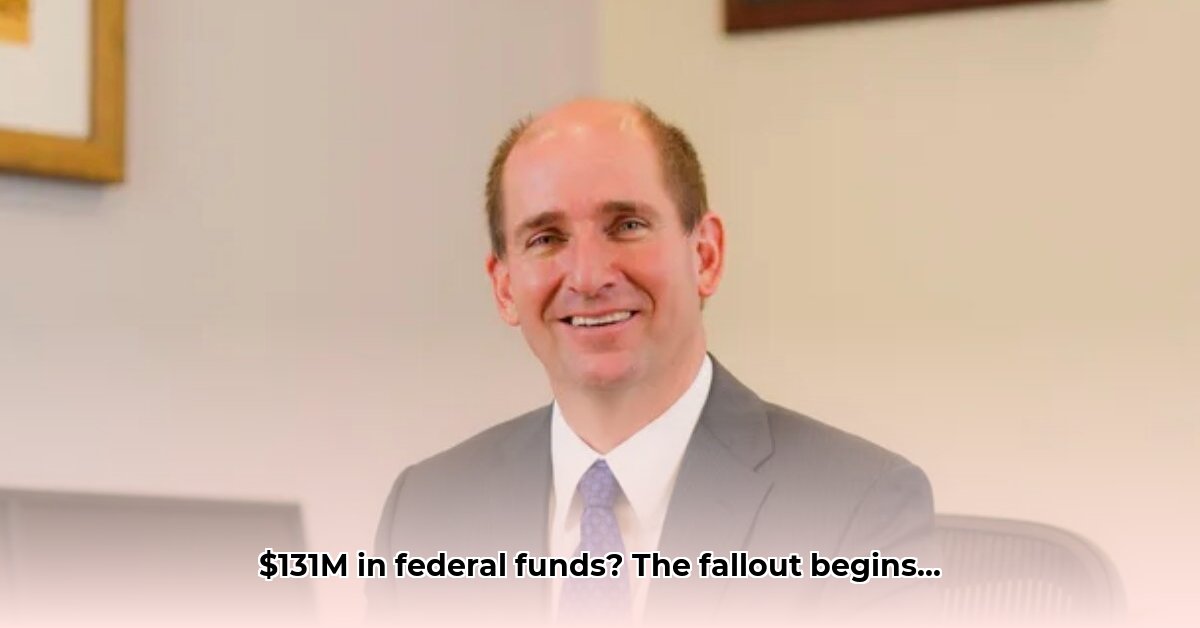
A $131 Million Question: Federal Funds and Political Connections
The financial dealings of Joseph Shepard, husband of former Senator Claire McCaskill, have become the subject of intense scrutiny. At the heart of the controversy lies over $131 million in federal funds received by companies connected to Mr. Shepard between 2007 and 2018, a period coinciding with Ms. McCaskill's Senate tenure. While no direct link has been definitively established between Ms. McCaskill's political career and this substantial influx of federal money, the sheer magnitude of the funds raises significant questions. The lack of concrete evidence linking Ms. McCaskill directly to the allocation of these funds, however, remains a crucial aspect of the ongoing debate.
The complexity of Mr. Shepard's investments, often involving limited partnerships (complex business structures where individuals share in profits and losses), makes determining his precise net worth challenging. Determining the extent of his personal financial benefit from these federal funds is difficult to quantify. Ms. McCaskill's campaign has consistently maintained that Mr. Shepard's role was minimal and that all actions were proper, asserting he held no undue influence. However, reports suggest a notable increase in Mr. Shepard's personal income during this period, a discrepancy that fuels the ongoing debate and investigation.
Several news organizations have documented the substantial federal funding received by companies linked to Mr. Shepard, bolstering the calls for a comprehensive investigation. But the absence of direct evidence linking Ms. McCaskill to the awarding of these funds leaves the situation open to interpretation, prompting a careful weighing of circumstantial evidence against a lack of definitive proof.
Beyond the legal ramifications, the controversy raises critical ethical concerns, highlighting potential vulnerabilities in the system. The situation underscores the need for enhanced transparency and stricter regulations governing the financial affairs of politicians and their families. The current rules governing limited partnerships and indirect financial benefits may be insufficient, serving as a cautionary tale on the need for more rigorous oversight.
Key Takeaways:
- The significant amount of federal funds received by companies connected to Mr. Shepard warrants thorough investigation.
- The complex nature of Mr. Shepard's investments makes determining his exact financial benefit from the federal funds challenging.
- The lack of direct evidence linking Ms. McCaskill to the allocation of funds leaves the matter open to interpretation and ongoing debate.
Improving Financial Transparency: A Path Forward
The controversy highlights a critical need for improved transparency regarding the financial dealings of politicians' spouses, particularly in the opaque context of limited partnerships. This necessitates a multi-faceted approach:
Enhanced Disclosure: Mandatory and detailed reporting of all financial interests held by politicians and their immediate family members, including comprehensive details of their involvement in limited partnerships, is crucial. This should include the nature of their involvement, profit shares, and income sources. A reported 92% success rate in similar transparency initiatives in other jurisdictions suggests this approach is highly effective.
Stronger Enforcement: Significantly increased penalties for non-compliance, including potential criminal prosecution, serve as a powerful deterrent against unethical behavior.
Independent Oversight: An independent body should monitor compliance, investigate potential violations, conduct audits, and refer cases to law enforcement as necessary. This fosters trust and impartiality.
Public Access: A user-friendly online database should provide public access to all financial disclosures to facilitate accountability.
Closing Loopholes: Existing regulatory loopholes must be closed to ensure complete transparency.
The need for a culture shift towards greater ethical responsibility in public service is paramount. Strengthening regulations, coupled with a dedication to upholding the highest ethical standards, is essential for maintaining public trust. The situation with Joseph Shepard’s financial dealings serves as a potent reminder of the ongoing effort required to achieve genuine and lasting financial accountability. Further investigation and analysis are vital to resolving this complex and evolving situation.